
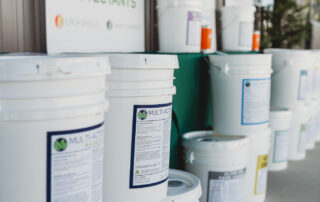
Why Do I Need Calcium?
By Robert Smith, Chief Agronomist - Providing your soils with an adequate level of soluble and available calcium is an essential part of well-rounded fertilizer nutrition practice for several reasons. Here’s why and how to add calcium to soil. Calcium improves tilth and friability by reducing the stickiness and clinging ability of soils containing clay. Calcium, by breaking up clay particles and improving clay soil, increases the surface area of soils so more nutrients can be held by each particle. Calcium, by loosening up soil, increases water penetration ability, water-holding capacity, and aeration ability. The soil biome requires oxygen; thus, the more oxygen available, the more soil life it can support.> Read more

A Year of Nutrition in Citrus
By Dennis Laux, CCA - It's a new year, and in the citrus world, we drag 2025 into 2026 with crop harvest and farming techniques. There are a lot of different styles of farming today. Some are bare bones and some are upper-end. Today I am using the University of California, and Yara, nutrient timelines as a reference. Anyone can look these up, and they are great reference points to use for timing and products used in orchards. The four basic phases we’re diving into are: Flowering Fruit set Fruit fill Post harvest Flowering Four nutrients are needed: Nitrogen Phosphorus Potassium Calcium Nitrogen boosts yield and tree productivity.> Read more

Is a 3 BILLION-Pound Almond Crop Possible?
By Chase Thomas, CCA The quick and easy answer is yes, it is possible to achieve a 3 billion-pound almond crop. But is it likely to happen? No, and here's why. Many factors must align perfectly for such a large crop, and Mother Nature often intervenes with unexpected challenges during the growing season, weather variability, pests, or other curveballs, that limit maximum potential yields. Growers themselves also contribute to reduced output through self-imposed constraints. One major reason a 3-billion-pound crop remains unlikely is the ongoing impact of the Sustainable Groundwater Management Act (SGMA). SGMA is enforcing strict groundwater pumping limits in overdrafted basins throughout the San Joaquin Valley. These water restrictions are leading to a decline in bearing> Read more
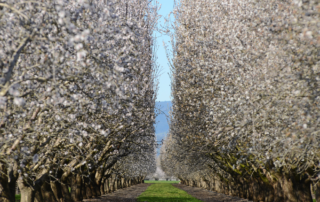
Almond Bloom Begins: Why Phosphorus, Boron, Zinc & Calcium Matter Most
By Robert Smith, Chief Agronomist January has quickly passed, and now we’re off to the start of February. The onset of this month means this week’s Tulare Farm Equipment Show (WAE) and the beginning of almond bloom. Temperatures have been roughly 2–4 degrees above normal for cool foggy mornings and sunny afternoons. The month was described as having a "warm west" pattern, with some areas into the 70’s. The warm afternoon will bring on almond blooms, and now is the time to prepare by reviewing July plant tissue tests for California almonds, particularly leaf analysis, as they are critical for determining nitrogen, phosphorus, potassium (NPK), and micronutrient levels. With almond bloom starting, four nutrients have a significant impact on> Read more