Almond Bloom Begins: Why Phosphorus, Boron, Zinc & Calcium Matter Most
By Robert Smith, Chief Agronomist
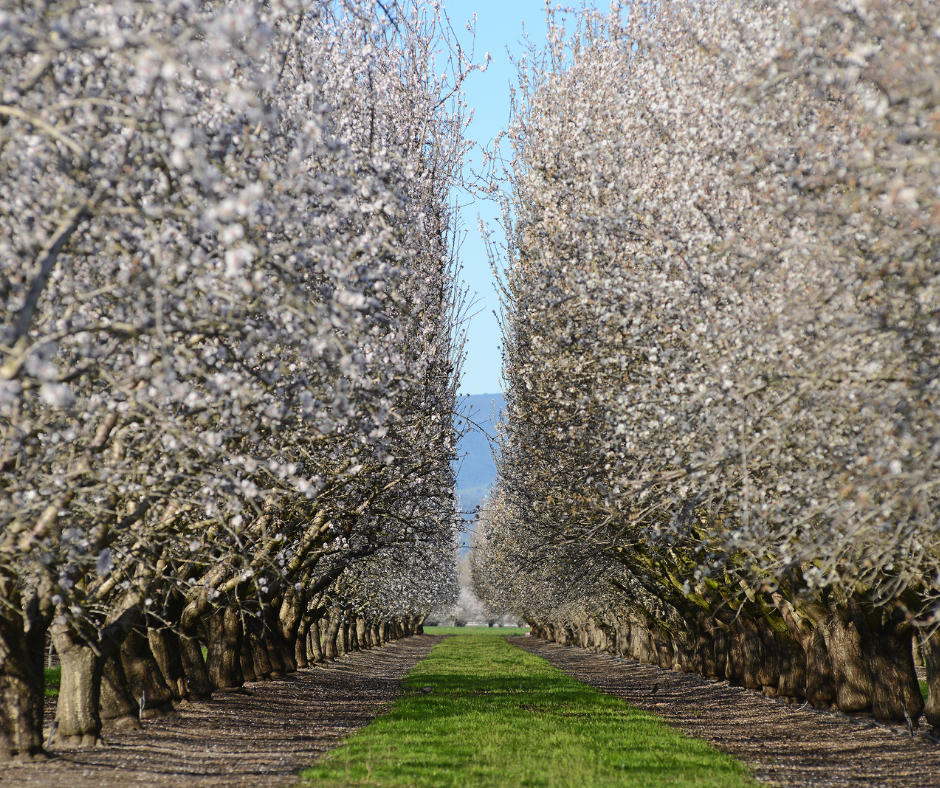
January has quickly passed, and now we’re off to the start of February. The onset of this month means this week’s Tulare Farm Equipment Show (WAE) and the beginning of almond bloom. Temperatures have been roughly 2–4 degrees above normal for cool foggy mornings and sunny afternoons. The month was described as having a “warm west” pattern, with some areas into the 70’s. The warm afternoon will bring on almond blooms, and now is the time to prepare by reviewing July plant tissue tests for California almonds, particularly leaf analysis, as they are critical for determining nitrogen, phosphorus, potassium (NPK), and micronutrient levels.
With almond bloom starting, four nutrients have a significant impact on bloom. In my mind, at bloom, those are Phosphorus, Boron, Zinc, and Calcium. Having enough of these nutrients can set you up for a great year; without them, the season might fall a little flat.
Phosphorus is known to improve root development, which is a good reason to fertigate with an ortho phosphate (plant-ready) source. New research has shown that phosphate applications prior to bloom can increase nectar production. In their research paper published in the Journal of Experimental Botany, Karunakaran, Ranjith & Yermiyahu, indicate that applying phosphorus increases nectar secretion in almond flowers.
This increase in nectar attracts more honeybees, essential for cross-pollination. Their work also shows that nectar production can increase by as much as 140%, thereby enhancing honeybee visitation and improving cross-pollination. So, the moral of the story is: Higher phosphorus levels correspond to larger overall yields due to the combination of improved plant growth and better pollination efficiency.
Boron is crucial for pollen germination, viability, and the elongation of the pollen tube, allowing it to reach the ovule. It is essential for reducing flower/nut drop and preventing “blank” or empty nuts.
Zinc plays a vital role in the synthesis of growth hormones (auxins) needed for early tissue development. It is necessary for nutrient utilization, it boosts photosynthesis, and improves overall nut set and retention.
Calcium is best known as the “cement” between cells; it ensures the structural integrity of developing tissues, aids cell division, and expansion. It enhances the uptake of boron and is critical for maintaining cell wall strength in developing fruit.
When these nutrients are in good supply, they work together synergistically. Calcium and boron work together to strengthen cell walls and facilitate the movement of nutrients and carbohydrates throughout the tree. The combination of zinc and boron increases nut retention, reduces empty nuts, and boosts overall kernel quality.
Ultra Gro products are designed to support this process by delivering highly efficient, soluble phosphorus (P) and synergistic nutrients in plant-available forms when trees need them most. Through well-timed soil and foliar phosphorus programs, Ultra Gro helps ensure adequate energy availability, stronger bloom performance, and enhanced nectar production, maximizing pollination efficiency.